
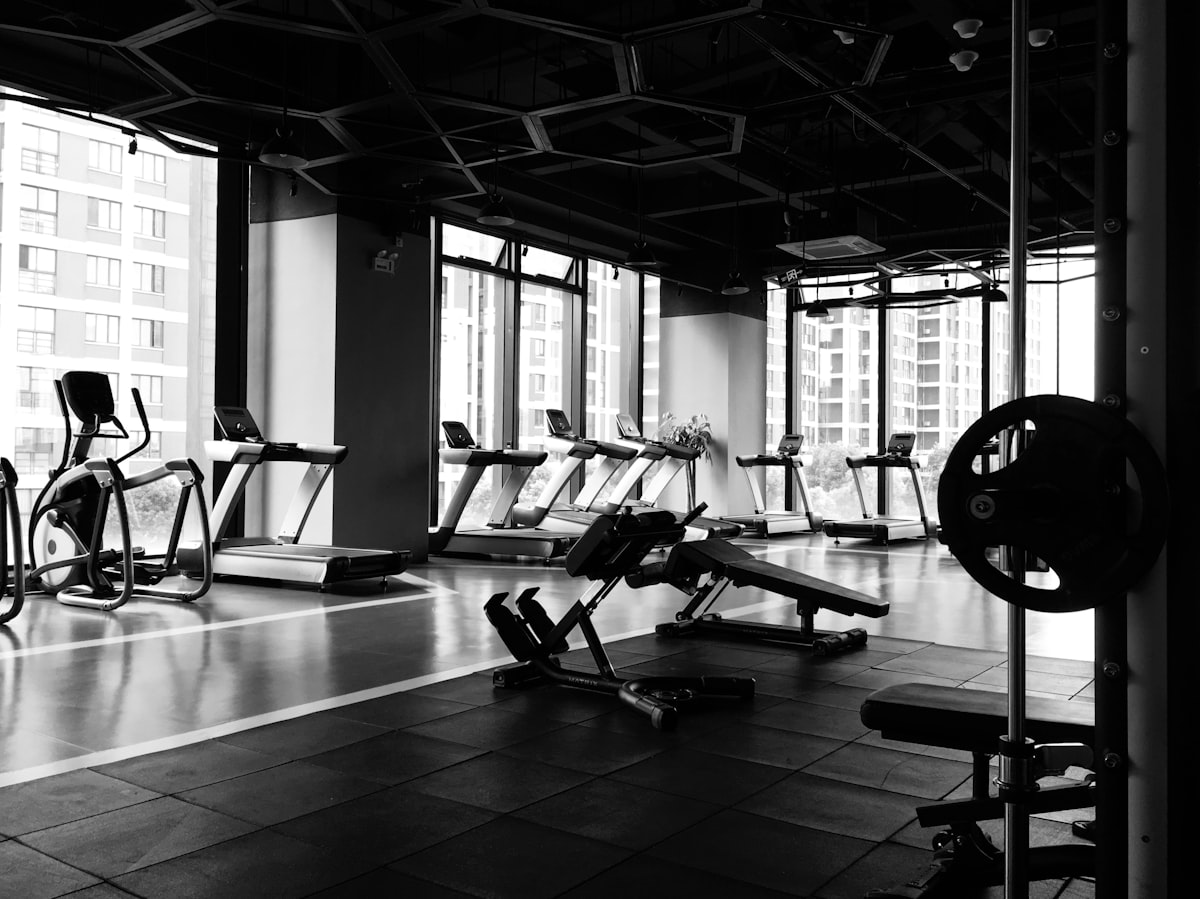
Small doesn’t mean cramped. It means every decision counts.
A 1,500 square foot gym that’s laid out well will outperform a 3,000 square foot gym that wasn’t. The difference isn’t the equipment. It’s the plan behind the equipment.
Define your primary training modality first
Before you place a single machine, answer this question: what does your gym do?
A small gym that tries to be everything ends up being nothing. You don’t have the floor space to have a full cardio section, a full free weight room, a cable section, and a functional training area. Pick your primary modality and let everything else support it.
If you’re a strength gym, the squat racks and free weight floor own the center. Everything else lives around them. If you’re a functional training studio, the turf or open floor is non-negotiable. If you’re a general fitness facility, cardio equipment often anchors one wall and strength equipment anchors another, with clear flow between.
Work the perimeter first
In a small gym, perimeter placement is your best friend. Machines and cardio equipment push to the walls. This preserves the center of the floor for movement, and movement is what makes a gym feel open.
A gym where every machine faces outward toward a wall, with the floor open in the middle, will feel twice the size of the same space where equipment is clustered in islands.
The three zones that matter most
Cardio zone. Usually along one wall. Treadmills and ellipticals face the same direction. Keep them uniform.
Strength zone. Where the weight lives. Free weights, benches, a squat rack if you have room. This zone needs the most clearance per square foot. Don’t crowd it.
Stretch and recovery zone. Even a 10 by 10 corner with mats and a foam roller station completes the experience. Members need somewhere to warm up and cool down that isn’t in the middle of the weight floor.
Circulation is the thing nobody plans for
The single biggest mistake in small gym layouts is not planning how people move. You need at least 5 feet of clear aisle between any two pieces of equipment. Map the path from the entrance to each zone before you finalize anything.
What to cut when you run out of space
Cut variety before you cut clearance. One squat rack with proper space beats two squat racks that are too close together. Cut cable machines before you cut free weights. Cut the stretching zone last.
When to bring in a layout consultant
Small gym projects are where layout mistakes hurt the most, because there’s no extra floor to absorb a bad decision. If you’re building a new facility or converting a commercial unit into a gym, getting the layout right before the equipment arrives is worth every dollar.
I do floor plan consulting for small commercial gym builds at every stage. If you’ve got a space you’re not sure about, let’s talk.
Fit Design Plus works with gym owners and operators to design functional, safe, and scalable equipment layouts. Based in Wichita Falls, TX.